
Adaptive Creativity
Why AI Makes Human Judgment More Valuable
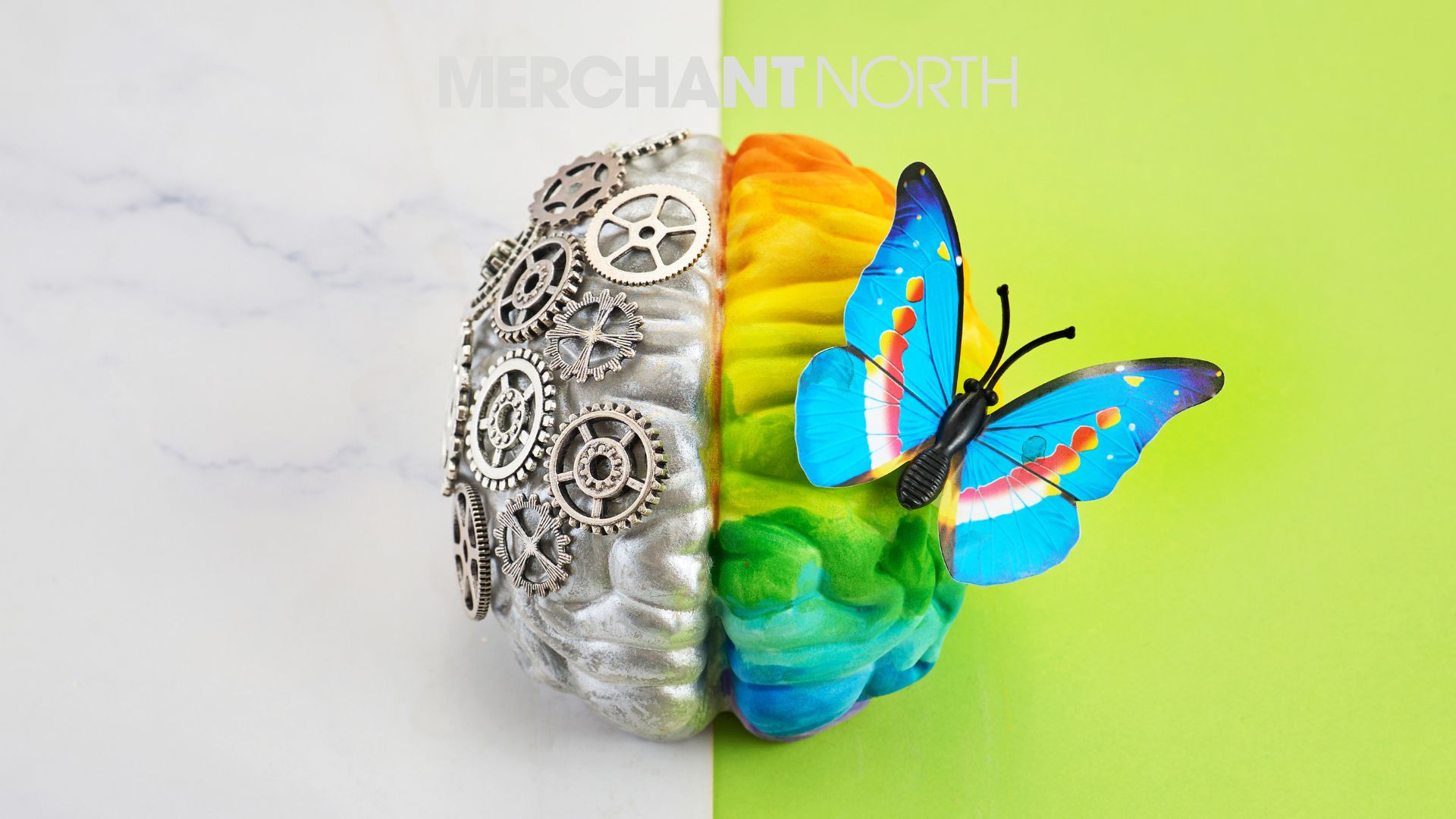
The question of whether AI would replace creative professionals dominated discussions, causing agencies to hold emergency meetings, trade publications to publish breathless reports, and many nervous individuals to refresh their portfolios.
The question was always too small.
Replacement anxiety treated AI as a blunt instrument — something that either did the job or didn't. It missed the more consequential shift. AI doesn't just produce outputs. It changes the conditions under which creative decisions are made. That is a different kind of disruption, and it requires a different kind of response.
The Three Layers Most People Conflate
Any serious account of AI and creative work has to start with a distinction that rarely gets made clearly enough.
Production creates assets. Ideation creates options. Imagination creates significance.
AI is already running at pace on the first layer and accelerating fast on the second. Copy at scale, visual concepts, structural variations, tonal ranges, audience hypotheses — all of it faster and more prolifically than any human team. This is not a minor capability. Agencies that treat it as peripheral are, to put it plainly, not paying attention.
Significance—what makes a brand's message meaningful and impactful—is linked to human memory, culture, emotions, ethics, and lived judgment, not just data.
Production generates outputs. Significance generates meaning. Only one of those builds a brand.
The Harvard Business School finding is instructive here: AI raised the output quality of lower-performing creatives by a substantial margin while having little measurable effect on the top tier. That is not a story about AI failing the talented. It is a story about what the talented actually do. AI raises the floor. The ceiling still belongs to human judgment.
Field Expands. The Difficulty Moves.
The blank page was always a friction point and a discipline. It forced genuine origination and resisted the path of least resistance. What AI has done is effectively retire the blank page as the primary creative challenge.
Creative teams now begin with an expanding field — tonal variations, language territories, visual directions, structural references, audience hypotheses, and cultural provocations — compressed into hours rather than weeks. The early-stage work of mapping the adjacent possible, to borrow from Steven Johnson's framing of how innovation moves, becomes dramatically faster.
This creates a less obvious but more interesting problem: the dangerous idea. Not the weak idea, which is easy to reject. The idea that feels creative enough, that nobody objects to, that is actually a polished version of something the category has already done six times. AI can surface the median solution fast. The discipline is in recognising it for what it is and moving further.
"Recursive prompting" is the practical method gaining traction among creative teams who actually know what they are doing with these tools. Generate the average answer deliberately, map the obvious territory intentionally, then use it as the thing to move away from. AI shows the floor of the creative field. Human judgment decides how far above it the work needs to reach.
Faster exploration only creates advantage in the hands of people with enough taste and strategic literacy to know which paths are shallow and which ones open into something ownable.
Selection Is an Act of Authorship
Here is where the structural shift in creative value becomes clearest. When the volume of viable options increases, the scarce skill is not generation. It is selection.
Rick Rubin does not play instruments on the records he produces. His creative contribution is almost entirely editorial: knowing what to pursue, what to cut, what is alive and what only sounds alive. The directorial model — where creative value comes from holding a vision coherently across many contributions rather than originating every element personally — is the model that scales in an AI-shaped creative economy.
For branding agencies, the implications are direct. Brands are built from coherent choices made consistently over time. Byron Sharp's research on memory structures and distinctive brand assets makes this point with commercial rigour: consistency in expression, not just consistency in quality, is what builds the recognition that drives commercial performance. AI can produce dozens of competent variations. It cannot decide which variation strengthens the brand's memory structure, which dilutes it, or which inadvertently starts dismantling the positioning the brand has spent years earning.
The creative director, the brand strategist, the experienced writer — none of these roles become less valuable when AI proliferates. They become more valuable, precisely because someone needs to decide what the abundance of possibility is becoming. Selection is authorship. In an era of infinite content, taste is the scarcest and most commercially consequential skill in the room.
A Weak Brand Core Scales Mediocrity
There is a paradox embedded in AI's creative utility that tends to surface at the worst possible moment: when a client has already shipped a lot of content.
AI amplifies whatever direction it is given. Strong direction, clear positioning, a genuine and distinctive brand voice, coherent visual principles, and a well-understood audience tension — these translate into AI-assisted work that is genuinely effective at scale. Vague direction, fuzzy positioning, borrowed tone, and category-default visual codes translate into something different: competent, prolific, and forgettable.
Without a strong brand core, AI defaults to the mathematical mean of the category. It produces content that looks like everything else the sector produces, only faster and cheaper. It optimises toward sameness, because sameness is what pattern recognition trained on the existing landscape produces when left unguided.
This is what agencies running AI-native or AI-assisted production models are learning, and the ones who are learning it well are placing brand strategy further upstream rather than treating it as a phase that can be shortened. AI does not reduce the need for rigorous brand definition. It exposes whether the brand definition was rigorous enough to guide expression at scale.
The brand bible, the tone of voice framework, the visual identity principles — these are not bureaucratic formalities. In an AI-shaped workflow, they are the operational guardrails that make the difference between an AI that scales a distinctive identity and an AI that accelerates the brand toward irrelevance.
The Centaur Model: How This Works in Practice
The most effective integration of AI into creative workflow follows a structure that could be called the Centaur model: part human, part AI, with clear separation of function rather than confused blending of roles.
Stage one is intent. Human teams define the brief, the cultural tension the work needs to resolve, the brand non-negotiables, the ambition, and the quality threshold. This is not a phase that benefits from AI involvement. It requires strategic clarity, client understanding, and the kind of judgment that comes from knowing why the work matters.
Stage two is expansion. AI maps the territory: generating visual directions, tonal variations, structural frameworks, headline ranges, and reference sets faster than any human team could build them. The output is not the campaign. It is the material the team reacts to.
Stage three is synthesis. Human teams select the directions with genuine resonance, the unexpected outliers that have emotional weight, the routes that are both brand-true and culturally specific enough to stand out. This is the editorial layer where creative value concentrates.
Stage four is refinement. AI scales, adapts, and variant-tests across markets, channels, and formats—production at speed, guided by the approved creative direction.
The discipline is in not skipping stage one and not outsourcing stage three. When agencies bypass strategic framing and ask AI to make the campaign, they are trading authorship for average. When they use AI as a structured collaborator — entering the workflow only once intent has been set and exiting before judgment needs to be made — the tools genuinely extend creative reach rather than compromising it.
What AI Cannot Know
There is a limit to what any account of AI and creative workflow can establish through process alone, and it is worth being direct about it.
AI is a lagging indicator. It is trained on the cultural record, which means it knows what has already happened with precision and what is currently emerging with far less reliability. True creative relevance is often a leading indicator — an instinct that something is shifting in the culture before it has generated enough data to show up in a training set. The "ugly-cool" aesthetic that colonised certain consumer categories in recent years would not have been predictable from the dominant visual language of the preceding decade. The best cultural creative work has always moved slightly ahead of legibility. That is part of what gives it power.
More fundamentally, AI does not inhabit the social consequences of the patterns it recognises. It can generate the language of empathy without understanding what is at stake in any particular use of it. It can simulate cultural sensitivity without carrying the personal and institutional stakes that make cultural sensitivity meaningful. It can produce work that looks brave or generous or perfectly timed without being able to judge whether any of those things are actually true for a real audience in a real moment.
For agencies working across multiple markets — which is the daily reality of most significant brand assignments — this matters considerably. Adaptive creativity at global scale requires local creative intelligence: people who understand the symbolism that shapes how audiences interpret meaning, the historical associations certain language carries in certain contexts, the timing that makes a message feel urgent rather than opportunistic. AI can localise format and language. Only people can judge whether something will land or land badly.
The Bar Rises
The creative advantage in the current landscape will not belong to teams that use AI most prolifically, nor to those who treat resistance as a form of craft integrity. It belongs to teams that can direct intelligence — human, artificial, cultural, and strategic — toward outcomes that are genuinely worth producing.
When basic execution becomes easier and cheaper, the differentiation moves to thinking. Every agency can now produce a passable first draft, a credible visual direction, a functional campaign structure. The question every client will be asking with increasing explicitness is whether the underlying thinking is any good. The strategic insight, the creative perspective, the clarity of positioning, the courage of the choices made — these become the visible differentiators when the production barrier has been lowered.
AI will not replace human imagination. What it will do, with increasing clarity, is expose the difference between imagination and mere output. The teams that emerge with genuine competitive distinction will be the ones that used AI to push further, not to arrive sooner at something ordinary.
Photography did not end painting. It freed painting from the obligation to document reality, which opened the path to everything painting was actually capable of. The parallel holds. As AI takes on more of the functions that were always secondary to the real work of creative agencies — the iteration, the variation, the rapid mapping of already-known territory — it creates space for human judgment to do what it does best.
Deciding what matters. Finding a way to make others feel it too.
That is the work AI will not do. It is also the work that, by any serious measure of brand value, is the only work that counts.